
September 30, 2026
The Importance of Strengthening Intuition in Children
Children are naturally curious, observant, and deeply connected to their feelings. Long before they can fully explain their thoughts, they often have a remarkable ability to sense when something feels right, wrong, comfortable, or uncomfortable. This inner sense is often referred to as intuition.
Strengthening intuition in children does not mean teaching them to rely on feelings instead of facts. Rather, it means helping them recognize their inner signals, develop self-awareness, and learn to combine those signals with thoughtful decision-making.
What Is Intuition?
Intuition is the ability to understand or sense something without consciously working through every step of a logical process. In children, it may appear as a feeling that they should stay away from a particular situation, a sudden creative idea, or an instinct about whether something feels comfortable or safe.
Children's intuitive responses can be influenced by their experiences, emotions, observations, and relationships. When adults listen to children and encourage them to talk about what they notice and feel, children can gradually become more aware of these internal signals.
Instead of immediately providing every answer, parents and educators can sometimes ask:
What do you think?
What are your options?
What does your instinct tell you?
What information do you need before deciding?
These questions encourage children to participate actively in their own decision-making.
How Can Parents and Educators Strengthen Intuition?
Strengthening intuition doesn't require complicated exercises. Everyday interactions can provide opportunities.
Create Space for Children to Speak
Give children time to explain what they think and feel without immediately correcting or dismissing them. Feeling heard teaches children that their experiences and observations matter.
Encourage Mindful Observation
Activities such as spending time in nature, listening quietly to sounds, noticing body sensations, or observing emotions can help children become more aware of what is happening around and within them.
Encourage Questions Rather Than Immediate Answers
When appropriate, allow children to think through situations themselves. This helps them develop both intuition and reasoning.
Teach the Difference Between Feelings and Facts
A child's feeling is real and deserves to be acknowledged, but a feeling isn't always proof that something is true. Teaching children to say, “This is how I feel, and now let's find out what is happening,” helps them develop balanced judgment.
The Long-Term Benefits
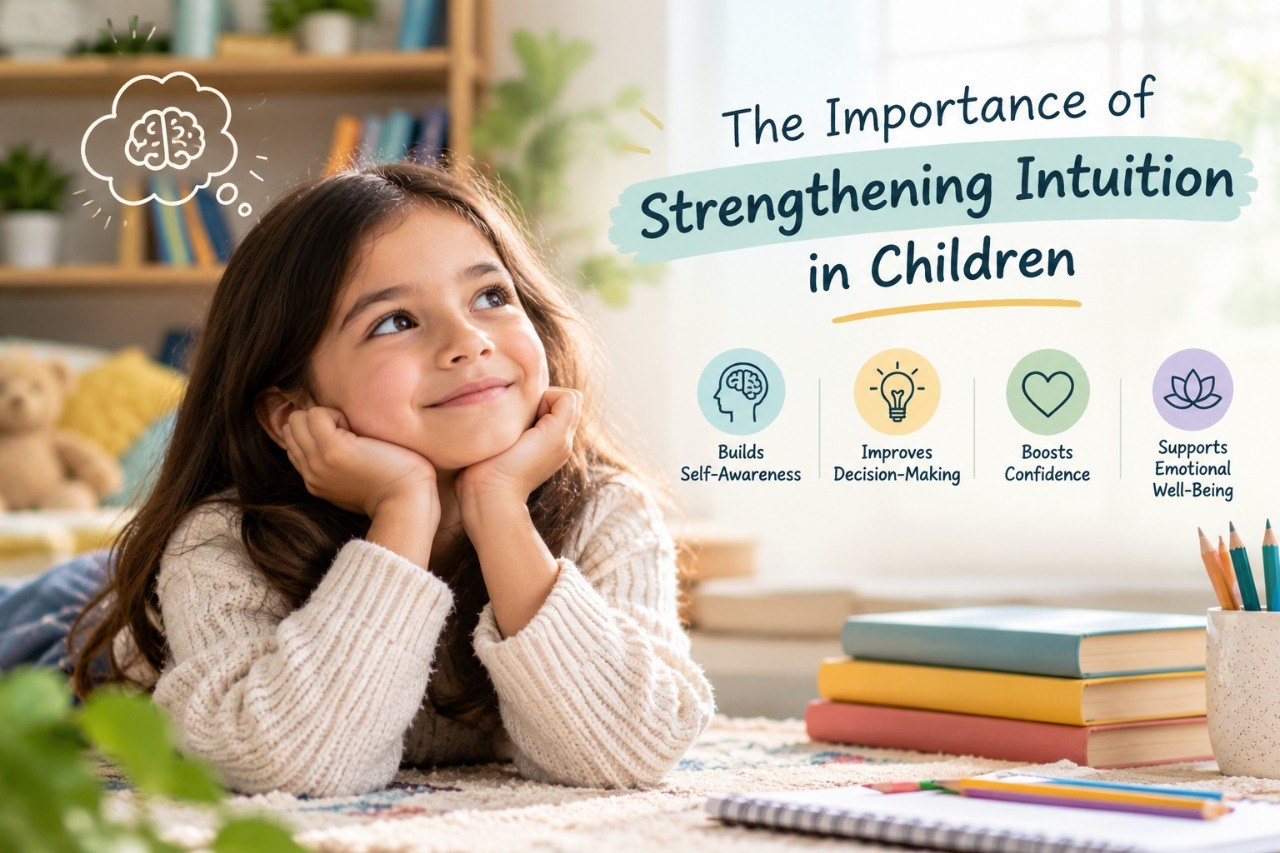
When children learn to listen to themselves while also thinking critically, they can develop a valuable combination of self-awareness, confidence, creativity, emotional intelligence, and sound judgment.
The goal is not to raise children who blindly follow every instinct. It is to help them become thoughtful individuals who can notice their inner signals, question them when necessary, gather information, and make informed choices.
In a world filled with constant information and outside opinions, the ability to pause and listen inwardly can be an important life skill.
Strengthening intuition is ultimately about helping children know themselves better. When children learn that their thoughts and feelings are worth noticing—and that they can combine them with knowledge, reasoning, and guidance—they are better equipped to navigate childhood and the years ahead with confidence and awareness.
Curious what a class feels like?
Book a free 15 minute discovery call and I will answer all your questions.
Book my free discovery call